Life insurance claims connected to boating accidents are frequently denied due to allegations involving intoxication, policy exclusions, alleged misrepresentations, or lapses in coverage. Insurers often conduct detailed investigations because boating incidents raise complex questions about cause of death, compliance with safety rules, and risk classification. In New York, beneficiaries may still have legal pathways to challenge a denial and pursue recovery of benefits depending on the facts and policy language involved.

Life Insurance Denials After Boating Accidents: Common Reasons Insurers Refuse Payment 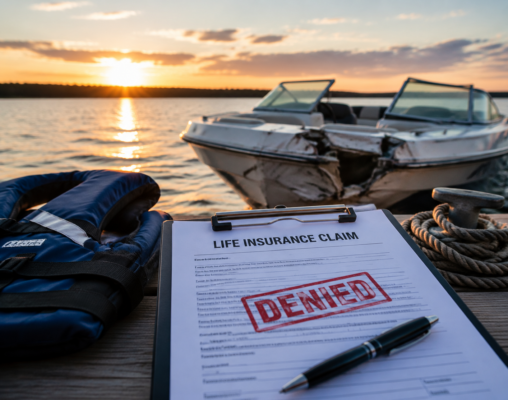
Families facing the loss of a loved one in a boating accident often encounter unexpected resistance from insurers when filing a life insurance claim. Trief Olk & Dror regularly assists beneficiaries in New York who are surprised to learn that a claim they believed would be straightforward has instead been delayed, questioned, or denied outright. These situations can feel especially frustrating because the cause of death may appear clearly accidental, yet insurers frequently rely on technical policy language and investigative findings to dispute payment.
Boating accidents often trigger heightened scrutiny because they can involve multiple contributing factors such as alcohol consumption, weather conditions, navigation decisions, and safety compliance issues. Insurers may use these elements to argue that an exclusion applies or that the circumstances fall outside policy coverage. Even when families believe the policy should respond without issue, insurers may interpret events differently and rely on internal review procedures that are designed to limit payout exposure.
Understanding why these denials happen is often the first step toward identifying whether the insurer’s decision can be challenged under New York law.
Why Boating Accidents Trigger Increased Insurance Scrutiny
Boating incidents tend to involve fact patterns that are less controlled than other types of accidents, which gives insurers more room to question liability and coverage. Unlike a clearly documented hospital death or long-term illness, a boating accident may require reconstruction of events, witness statements, and toxicology reports. Insurers often use this complexity to delay payment or argue that certain policy exclusions apply.
In many cases, insurers also review whether the insured complied with boating regulations, including licensing requirements, speed limits, and alcohol restrictions. These factors are sometimes used to support denial theories even when they do not directly determine cause of death.


Alcohol and Intoxication Allegations
One of the most common grounds for denial in boating-related claims involves allegations of alcohol or drug use. Many life insurance policies contain exclusions that limit or deny coverage if intoxication contributed to the accident. Insurers may rely on toxicology results, law enforcement reports, or witness statements to build this argument.
Even when alcohol levels are disputed or not clearly linked to causation, insurers may still attempt to apply these exclusions broadly. Beneficiaries often find that these allegations become a central focus of the insurer’s investigation.
More information about how insurers commonly justify denials can be found here:
https://lifeinsurancelawfirm.com/why-do-life-insurance-companies-deny-claims/
Misrepresentation on the Insurance Application
Another frequent issue involves alleged misrepresentations made during the application process. Insurers may argue that the policy should be rescinded if they believe the insured failed to disclose relevant medical conditions, lifestyle habits, or boating activity risk factors.
These disputes often arise during the contestability period, when insurers have broader authority to investigate application statements. Even minor discrepancies can sometimes be used as a basis for denial, depending on how the insurer interprets materiality.
Policy Lapse Due to Nonpayment
Coverage disputes may also arise if the insurer claims the policy lapsed due to missed premium payments. Families are often unaware that payments were missed or that notices were sent. In some situations, the insured may have been incapacitated or unable to maintain payments, yet the insurer still treats the policy as terminated.
New York law may provide protections in certain circumstances, especially where notice requirements were not properly followed. However, insurers frequently rely on lapse arguments as a primary defense against payment.
Additional context about deadlines and policy obligations is available here:
https://lifeinsurancelawfirm.com/for-life-insurance-benefit-and-other-claim-denials-deadlines-matter/
Contestability Period Investigations
If a death occurs within the first two years of a policy, insurers typically conduct a more aggressive review under the contestability period. During this time, insurers may re-examine medical history, financial disclosures, and application statements in detail.
Boating accident claims within this period often face extended delays while insurers attempt to identify any grounds for rescission. Even when the accident appears unrelated to the original application, insurers may still search for inconsistencies that could justify denial.
We contacted Trief, Olk & Dror to help us with a life insurance issue and Shelly Friedland was the attorney assigned to our case. Before Shelly took our case she explained to us that the likelihood of our success without going to court was possible but not likely. Unfortunately we did not get the outcome we had hoped for but it was our decision to not move forward and have our case litigated. Shelly is very knowledgeable and was very straight-forward in her assessment of our case as we moved forward. She was very patient and thorough in answering our questions. She always responded in a timely manner and listened to our concerns. We would certainly recommend Shelly and would use her firm again in the future.” - John Ramig If there is any possibility of winning your life insurance case – this is the place to do it for you. They are efficient, honest and will achieve the best possible outcome. Shelly Friedland worked on my case where a life insurance policy had lapsed and was even a few days beyond the grace period. Farmers had rejected my claim twice and was unwilling to take a second look. Shelly was able to get them to pay the entire claim without going to court, and the full amount was deposited in my account within a couple months. Highest recommendation.” - Kathleen Brown Trief, Olk & Dror is a superior law firm. Their attorneys and other legal professionals have a brilliant understanding of the law and the litigation process. They diligently perform their work in an efficient, strategic and cost-effective manner to ensure the best possible outcomes for their clients. - Christopher Hughes
Cause of Death Classification Disputes
Insurers may also dispute how the death is classified under the policy terms. While many boating accidents are clearly accidental, insurers sometimes attempt to reframe the incident based on contributing factors or alleged negligence.
This type of dispute can become highly technical, particularly when multiple causes are suggested or when toxicology and environmental conditions are involved.
What Beneficiaries Should Do After a Denial
When a denial letter is received, beneficiaries should carefully review the stated reasons and preserve all relevant documentation. Accident reports, medical records, communication logs, and policy documents often play a key role in evaluating whether the insurer’s decision is supportable.
Many claims can be challenged through internal appeals or additional documentation submissions. A structured review of the insurer’s reasoning is often necessary to determine whether the denial aligns with policy language or whether it can be contested.
Guidance on appealing denied claims is available here:
https://lifeinsurancelawfirm.com/appealing-denied-life-insurance-claims-a-beneficiarys-guide/
Legal Options for Challenging Denials
Depending on the facts, beneficiaries may pursue an appeal or file litigation to enforce policy benefits. Legal arguments often focus on whether exclusions were properly applied, whether the insurer met its obligations under New York law, and whether the evidence supports the denial decision.
In many cases, insurers reassess their position once formal legal action is initiated, particularly when factual disputes are strong or documentation supports coverage.
Settlements & Verdicts
More information about legal representation in denied claim disputes can be found here:
https://lifeinsurancelawfirm.com/life-insurance-denial-lawyer/
and here:
https://lifeinsurancelawfirm.com/life-insurance-claim-lawyer/
When disputes escalate, litigation may become necessary:
https://lifeinsurancelawfirm.com/life-insurance-denial-lawsuit/
How Legal Guidance Can Impact Outcomes
Boating accident-related insurance disputes often require careful analysis of medical evidence, investigative reports, and policy language. Insurers may rely on technical interpretations that require legal and factual rebuttal.
Trief Olk & Dror works with beneficiaries to evaluate denial letters, identify weaknesses in insurer reasoning, and pursue recovery where appropriate under New York law. These cases often involve detailed review of underwriting files and accident reconstruction evidence to establish whether coverage should apply.
If a life insurance claim has been denied following a boating accident, it may still be possible to challenge the insurer’s decision. Trief Olk & Dror offers a free consultation to evaluate denied claims and discuss potential legal options available in New York.
Disclaimer
This is for informational purposes only and does not constitute legal advice. Consult an attorney regarding your specific situation.